Alignment: An Answer When Things are Hard
Aug 31, 2023
Alignment is not a slogan — it is the evidence of mature leadership. When vision is clear, priorities are shared, and psychological safety is present, teams move in singular direction with confidence and conviction. Great leaders don’t drift into alignment; they build it intentionally.
Let’s talk about alignment—not as a vague ideal, but as a defining trait of high-maturity leadership.
Think of a symphony orchestra—every player contributing their part with perfect timing, all led by a conductor with a shared understanding of what success sounds like. That’s alignment in action.
Leadership is no different.. Yet somehow, we often have abstract notions on teamwork, alignment, and what makes high performance teams.
When I read this article by Jack McGuinness, I was delighted by his definition of alignment.

How often are we off the mark on these items?
I suspect that you could walk in today and ask your team these three questions and have surprisingly different answers:
-
What’s the vision and how are you helping bring it to life?
-
How confident are you that you know what’s important and impactful to the team and business right now?
-
What do you feel is preventing you and the team from doing your best work?
When we seek to do great work and get stuff done, we are easily tempted to move fast as an individual and without considering its impacts downstream.
We might favor our own capabilities and do heroic acts and prop up our ego so we can at least point to ourselves even if the team was struggling.
We might even lower our standards and make excuses that attempt to justify our situation.
If we are fatigued, or overwhelmed, or burning out we might let the fog of ambiguity and chaos steer us into activity that is not beneficial to the team or company. Worse, we might embrace passivity and let that distance us from any real responsibility.
It’s also likely we start going through the motions, getting by, and acting as if things are ok when they very clearly are not.
Instead of leaning in and sharing concerns, staying connected, and trying to have an emotionally intelligent conversation around the challenges and personal impact, we can further back away and even harden ourselves and become defensive.
These are signs of misalignment—signals of leadership drift. Mature leaders don't ignore these—they confront them, because that’s what it means to walk The Path of a Leader.
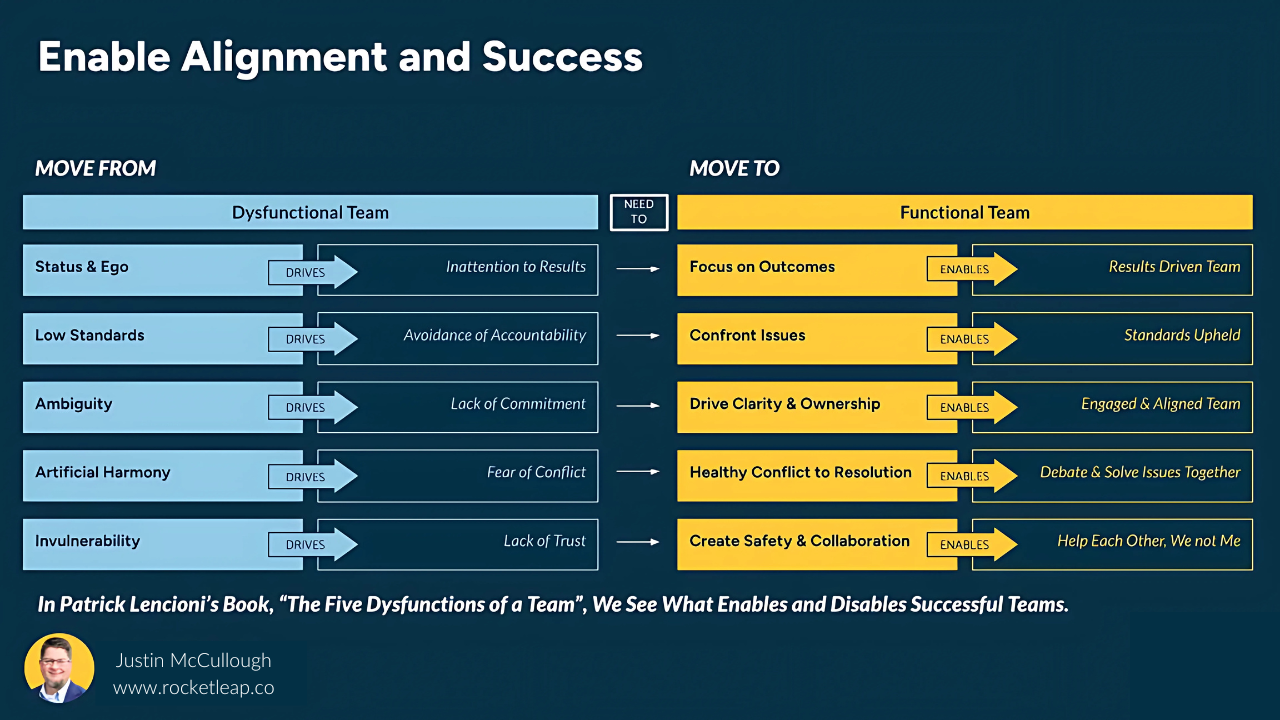
The good news is alignment is within reach—if we lead with intention. Leadership isn’t about waiting for the perfect moment; it’s about choosing the right direction and modeling the way forward. A singular direction. And be intentional about that recipe of success.
This is why I put so much emphasis on collaboration and psychological safety.
Creating environments of trust, collaboration, and psychological safety isn’t intuitive—but it is essential. These are not soft leadership traits. They are the hard edge of maturity. That’s why I created the Four Corners of a Good GSD Guide—to help leaders model and teach these fundamentals.
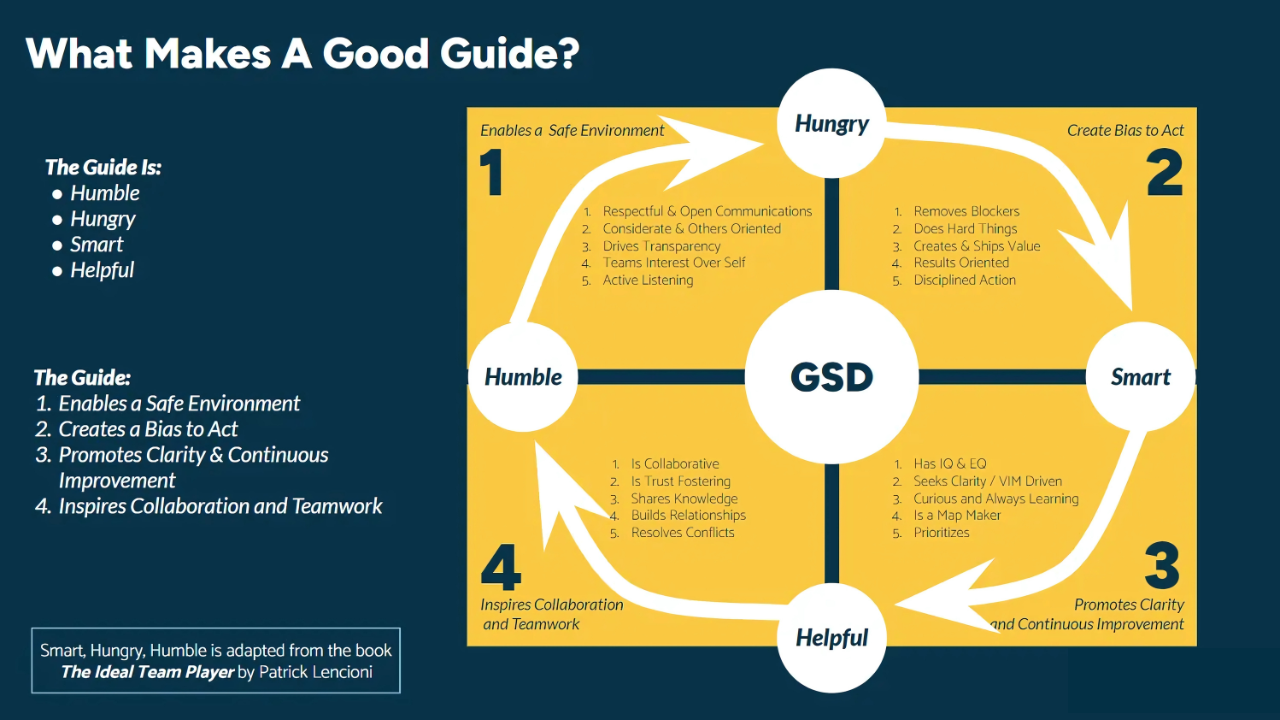
The Four Corners helps us understand fundamentals and principles that naturally create the positive results we desire around clarity, teamwork, creative collaboration, problem solving, and generating positive outcomes.
But to do these things requires intention and willful action. Which brings us back to the pattern of success of vision, intention, and means. To do anything with intention we must be clear on the vision and the means necessary to make that intention successful.
In this case, alignment and success for a team means we must have a vision for a good team. A great team. A high-performing functional team.

We crave clarity and certainty—and so do the people we lead. When we lack both, we either lead by instinct or lead with intention. Leadership maturity is learning to use maps, models, and questions to bring others with you.
Someone once said to me, “embrace the suck.” But I’ve come to realize it’s more than just embracing discomfort—it’s about accepting that this is the work. The real work of leadership. The hard stuff we can’t delegate. The answers aren’t out there—they’re within us, waiting to be clarified and acted upon.
We have to constantly address difficult issues and do the hard work of confronting them with positive intent to make progress. And that progress should be understood through a common objective and vision of the future we want to collectively create together. And to do that, we are willing to be helpful and results focused.
These are things that have taken my entire career to understand and value—earned through experience, failure, and refinement. Today, this is what I teach others on the Path of a Leader.
They are easy to read, much less intuitive to implement – especially without a plan and deliberate effort. This is why I coach, mentor, and write—because leadership isn’t just about getting stuff done. It’s about leading with clarity, conviction, and alignment. Real impact always starts with the leader. Sometimes, a framework or a map is all we need to make progress. But if you need more than that, I’m here. Feel free to reach out.
#ThePathOfALeader
#GSD
I Appreciate you,
Justin
This post is part of The Path of a Leader — a collection of 36 powerful lessons on growth, leadership, and getting the right stuff done.
→ View the Full Series Index