Growth Planning Starts with AARD
Sep 06, 2023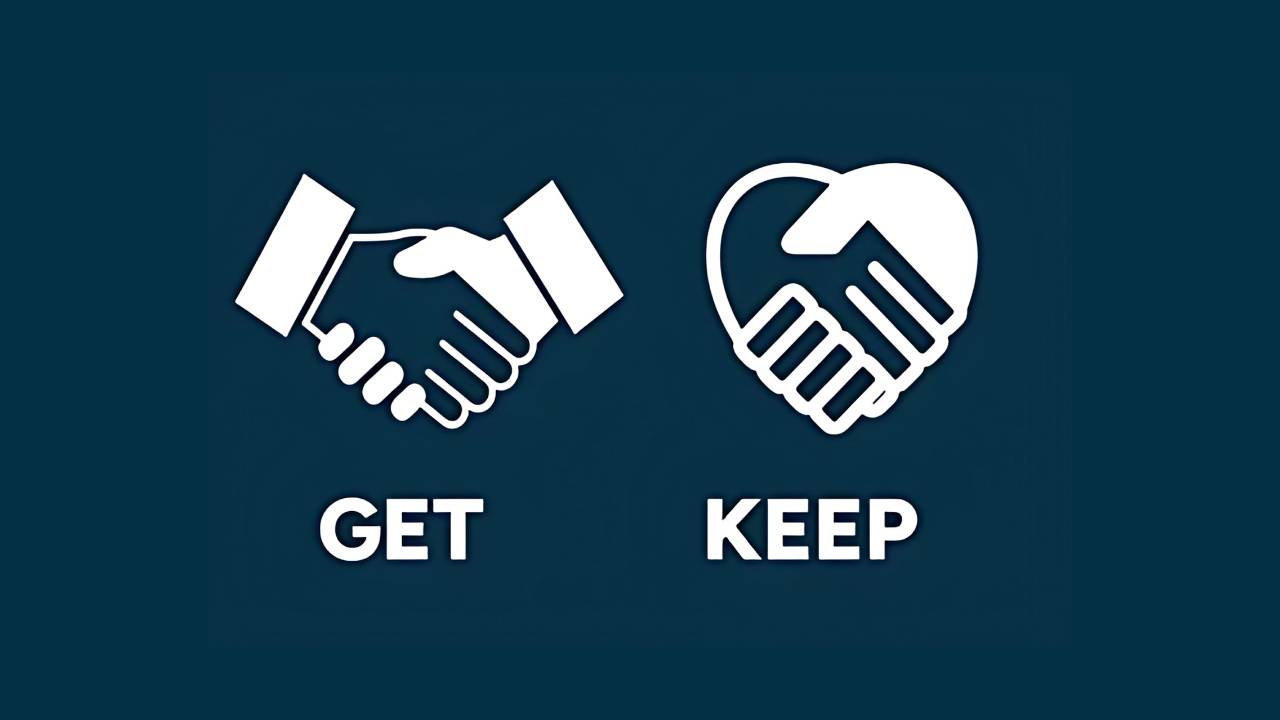
Leadership begins with clarity about what truly drives growth. Businesses exist to get and keep customers — and leaders are responsible for building the alignment, focus, and momentum to make that happen. When we simplify the map, we empower teams to do the right work and create real value.
Leadership begins with seeing clearly what matters most.
No matter your title or department, if you're a leader—your focus must be on getting and keeping customers. That’s the throughline of growth, progress, and purpose-driven action.
Your job as a leader is to bring about conditions for change… for growth… for progress… This is the outcome of getting stuff done. Which stuff gets done?
AARD is a simple way to frame up:
-
Growth opportunities
-
Growth problems
-
A clear view of the customer
-
Buy-in from broad stakeholders
So you can successfully build a growth plan.
This is how you clarify the right work—what’s valuable, what drives growth, and what demands your leadership.
I’ve been using and bulletproofing this framework for twenty years.
This started when I was building a tech startup. I was in my early twenties running my first company building an ecommerce platform. It was by necessity that I learned about “getting and keeping customers”.
To be honest, I was sometimes overly focused on making software, hiring people, focusing on operations, ‘running a business’. While necessary, I was confused on the fundamental truth that I needed to get and keep customers if I wanted to build my business.
Honestly, building a tech company in late 90’s early 2000’s was hard and showed me I needed help upskilling in sales. Although I already had an explosive sales career at Gateway Computers going from Sales Rep to Sales Manager, to Store Manager in less than two years, all my “sales” knowledge was a blend of instinct and specific technology training provided by Gateway during new hire training and onboarding.
I needed to learn how to better understand what customers cared about.
I had to learn to build value in something that was not easily understood and continue to serve the customer on future projects. But I didn’t really know and understand that clearly at the time until this book by Jeffery J Fox.
How to Become a Rainmaker is an encouraging read, uncluttered and simply stated on the timeless fundamentals of sales with a customer-centric view that clearly and vividly moves you into the place of knowing and understanding your customer so you can sell them and serve them well.
The thing about the Rainmaker book is right there in the subtitle: “The Rules for Getting and Keeping Customers and Clients”. It’s proven to be a richly rewarding lens to see the business world through.
This clarity became the north star that helped me articulate AARD—not just as a framework, but as a leadership tool to guide high-stakes decisions.
Trust me, no matter how complex your solution, service, product, and marketplace is, you can use this model to make sense of it.
So lets get into it.
Whether you’re launching something new, diagnosing a broken system, or scaling for the future—leadership starts with asking the right questions. AARD makes that visible.
When I’m walking into a new business as a leader on staff or a consultant, this is the starting point because it’s the thing that makes all future goals possible. If it’s working well, we can imagine expansion, scale, and all manner of things that pour gas on that fire.
When getting and keeping customers is not working well, we need to think of it like Christmas tree lights that should turn on when plugged in, but don’t. You know it should be working, but something is off somewhere, and like the lights you start tracing each bulb to confirm none are burned out all the way back to the power source. Leadership is figuring out where the short is and how to rewire the circuit.
Reminds me of Clark Griswold in National Lampoon’s Christmas Vacation.
AARD is for anything growth related because it informs us of important next steps and clarifies the right work to do.

We have the beginnings of a map. It’s essential that we are map makers in our pursuit of GSD and this one is extremely useful. This is where leadership shifts from being reactive to intentional. With a clear map, we become architects—not firefighters. We prioritize, align, and drive forward the right work with confidence.
Getting and Keeping customers consists of four parts:
-
Attract
-
Acquire
-
Retain
-
Deepen.
What I love about this: Simplicity.
It’s tempting to assume you know all you need to know now but that is a mistake. Its about the application.
It serves as a very simple picture of the customer’s lifecycle and what the customer-centric business cares about.
Some might call this a marketing funnel. That minimizes its utility.
I think of it as the major categories of getting and keeping customers which is a function of the organization not a specific department. In other words, this is the fundamental building block of the business.
Every leader should be able to articulate these basics.
Getting Customers = Attracting and Acquiring Customers.
Keeping Customers = Retaining and Deeping Customers.
Yes there are more sophisticated models and they have their place.
Yes, your product, service, solution is essential to this – but nothing happens without customers. No customers, no business.
To ease into this model and a first look at a business you might ask yourself some very simple questions. Things like:
-
How do we get customers?
-
How many prospective customers make it into the business?
-
How many customers buy more than one thing?
-
How could we sell the same customer repeatedly over time?
-
How many customers rave about us?
-
How many exit the business?
-
What can we do about it?
It is easy to get inspired from here and move to something deeper and actionable. On your own you can use this as a canvas and basically put lists of stuff in each category. This could be the start of a project backlog.
Remember my mini-course “An answer to ‘what’s your growth plan”? I used AARD to understand the Alpha, Beta, Launch, and Year 1 plan and was able to help the business understand we had a business problem, not a sales and marketing problem.

What I love about this: Specificity.
These four elements make it easy to bring many types of people together because It is very simple to comprehend.
We can use this to dig into specifics without losing context of our main goal which is getting and keeping customers, a fundamental concern of the entire business. And it helps you with that drum beat that the business is first and foremost in the getting and keeping customer business.
Use this to activate a discussion with all kinds of stakeholders who have different levels of understanding of sales, marketing, product, operations, and customer experience. The CFO, the front-end engineer, the operations manager, the service lead, the product owner - everyone - can all engage with this.
Sometimes there are silos or strong departmental agendas.
This helps overcome that because we can’t grow in a vacuum or a silo.
Its important others understand or we have priority and resourcing problems in the getting and keeping of customers.
We need others to care.
We need others to be a collaborator, a problem solver, and an enabler of the getting and keeping of customers. AARD is a good map for everyone to get on the same page.
Our goal is not to be a work horse tasked up to our eyeballs in work to do. Instead, we think and make sense of situations and create context and inspire others to act on what is valuable and important.
Getting and keeping customers is important and valuable!
How do we activate Stakeholders?
Let me further explain these categories to put a little meat on the bones of this framework so you can see what I mean when it comes to each category and bringing other stakeholders in.
Attract
What influences desirable prospects to see us and consider us? This includes concepts like branding, networking, messaging, advertising, generating traffic, generating leads, content marketing etc. This also includes our view of demographics, psychographics, needs, wants, desires, etc.
Acquire
What influences the convincing and ultimate purchase? This includes our understanding of the buyers journey, decision criteria, ability to speak to clear problems they have and how our solution addresses them, calls to action, offers, demo’s and deliver a desired transformation for the customer.
Retain
What satisfies the customer that we did what we said, delivered on the promise, and provided real value? And what did we do to create and foster a relationship worthy of a referral, additional follow ups, and created fertile ground for additional discovery and future offers? This also includes how we provide continuous support and return service as well as how we stay in touch with them.
Deepen
What can we do to take the next logical step with the next logical problem our customer faces? As our solution addressed one problem and they successfully move forward, what is another problem they will face where we can join them with more solutions? This includes things like upsells, cross-sales, joint ventures, partnerships as well as ongoing innovation and product development informed by your ideal customers.

What I love about this: Easy to Engage
All it takes is one person to know this level and deeper levels across each of the four categories.
The great thing is that everyone understands a journey, a life cycle, a beginning, middle and end.
They may not understand marketing or sales deeply, but they know the basics of being sold to and making a purchase and becoming a customer. You can be the trusted guide in the conversation.
All you have to do is set the stage for them to show up and engage.
It can be blank like this image, or you may have already started mapping it. There isn’t a wrong way to do this, but the goal is to make it accessible and drive engagement.

Try to avoid doing it like this. (I confess I have in fact done it like this)
The truth is that people crave context.
We love being in the know and being able to contribute.
This also promotes transparency and creating an information radiator that draws people in. This is the early step toward buy-in.
The ability to see the big picture simply and show a common through line allows for meaningful discussions on the right work to do.
Functionally it works like this.
If someone asks a question, that question can be placed in one of these categories or you can break it into smaller questions that string across multiple categories.
At this view, everyone can and should discuss and come up with questions and ideas. Context can unfold as a group talks through things.
It becomes obvious that some things should include other disciplines to address a problem and explain why things in one category inform the next category.
No one is surprised by deeper elements or considerations because they have a map even if you are having to tell them details, they don’t yet see, they can mentally place it on the map.
What if there were more questions and ideas on how to get and keep customers?
Would if there were more projects and more budget to address these items?
Would it help you?
This starts the process of defining the problem and the solution and the required levels of resourcing to get stuff done. It can often inspire big ideas and breakthroughs.

What I love about this: Prioritization
With this simple map, you can get others involved to wrestle with ideas and see if something is missing or discover whether a new opportunity current problem has ties across the entire process.
A simple spotlight is problem versus opportunity:
If something is broken and is an issue it will be in one or more of those four categories.
Opportunities to grow will also be in one or more of those four categories.
Ultimately, this map gets us oriented and focused on the right things.
This is essential for prioritization and activation around a shared goal and a positive outcome you seek to create.
Because we know our current context and where we are at any given step, we can look forward. We can start making bets on the future and using vision, intention, and means to bring forward future value based on issues and opportunities from these for categories.
This is how you prioritize value creation.
-
A real problem needs what solution?
-
A real opportunity needs what resourcing?
-
What do we need to create, change, add or remove?
From here you can create a value driven roadmap that clearly articulates a customer life cycle that you want to improve and expand.
From here others can see why this matters. It’s especially helpful with work that requires help from multiple teams or disciplines.

Engagement, Problem Solving, Prioritization
By this point, you can discuss dependencies and things that need to be more broadly understood. People from various groups can ask questions, open up new problems or opportunities and help solve them.
You can explain why things in one category inform the next category.
Others can explain how systems, or partners, or tools relate to this context.
As you clarify all this in context of swim lanes, getting buy-in and commitment becomes easier because people begin to see responsibility, expectation and what role they play in the overall picture of getting and keeping customers.
And when you continue the drum beat of getting and keeping customers, it helps distinguish a higher purpose to the work, not just a small project, initiative or task.
This is how I rallied sales, marketing, engineers, and senior leadership at Capital One to implement a sophisticated B2B lead to revenue management program.
This might help you make a business case for software development, analytics, sales support, new systems like a CMS or a CRM or an ERP.
This might help you increase your lead generation budget or add to the sales team or engineering team.
This might present a new way to scale, optimize or automate in an important aspect of your getting and keeping customers process.

We need less complexity and more clarity.
We need maps that help us do the right work - and most importantly - create alignment.
The key is to start with the one simple concept of businesses are in the business of getting and keeping customers and from there layer in one simple framework of attract, acquire, retain and deepen so you can provide endless opportunities for value creation and problem solving to grow and scale your business. All while ensuring you GSD with a view of the right work, the important and valuable work.
If you need help, I’m here. Don’t hesitate to reach out.
Remember, getting and keeping customers isn’t just a business need—it’s a leadership responsibility.
Use AARD to rally your team. Build alignment across silos. Elevate your leadership.
This is how we lead. This is how we GSD.
This is The Path of a Leader.
Leave a comment and share this if you got value. Helping me get more visibility with other leaders and people who GSD is how I help more people - which is my goal.
#ThePathOfALeader
#GSD
I appreciate you,
Justin
This post is part of The Path of a Leader — a collection of 36 powerful lessons on growth, leadership, and getting the right stuff done.
→ View the Full Series Index